Tuesday, 29 May 2012

Commentary: Raikkonen testing Lotus' patience with steering complaints


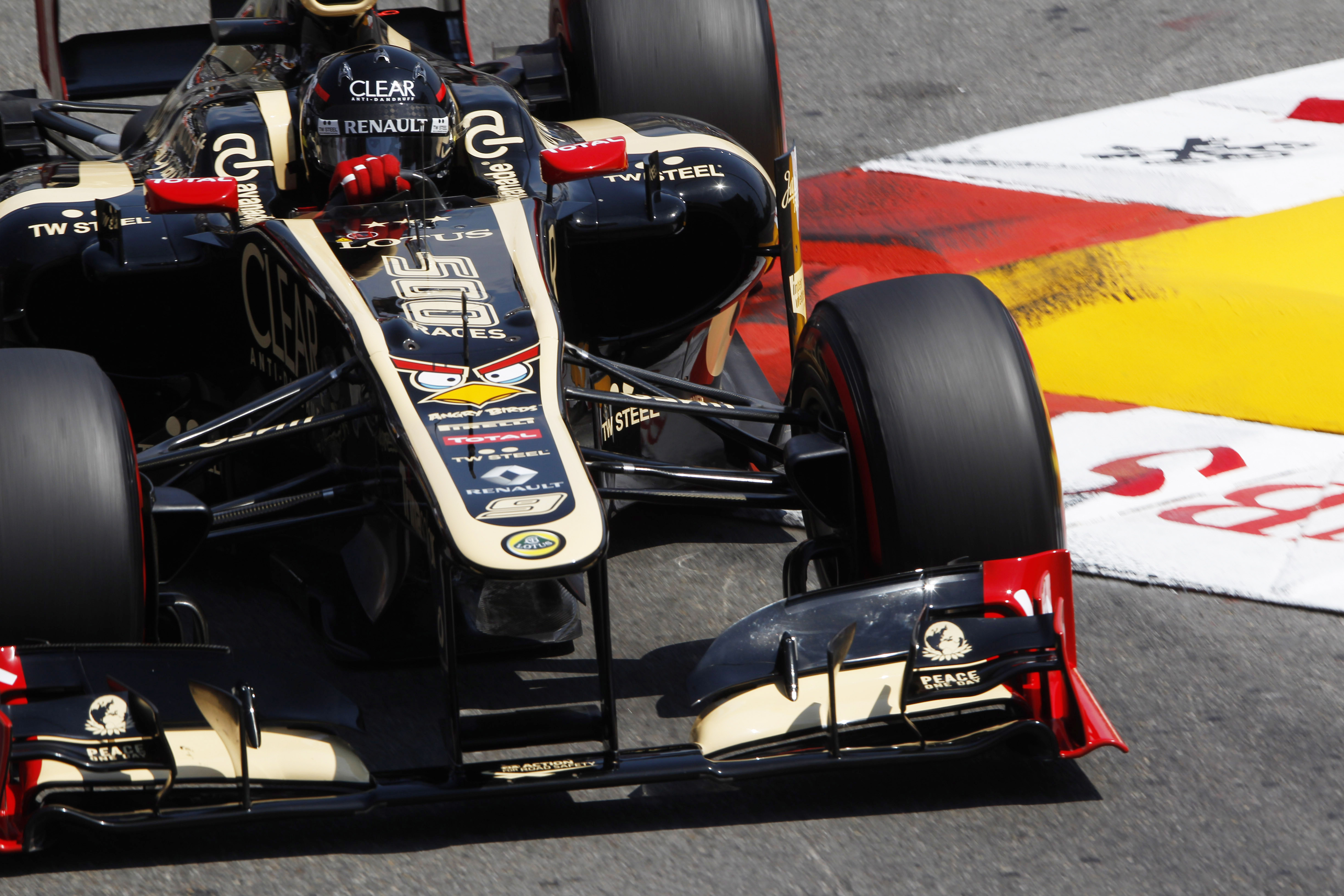
Kimi Raikkonen tried the Lotus team's patience with his performance over the Monaco Grand Prix weekend. It's the first time the new relationship has been seriously tested and where it goes from here is largely in Kimi's hands.


The Enstone team that was celebrating its 500th grand prix over the weekend - which includes its guises badged as Benetton, Renault and now Lotus - has always been a fabulously simple, down-to-earth operation, with a well-matched bunch of minimum-fuss racers at the core even as the management has changed around it. The management has always just secured the funds, hired the drivers and given the race team a budget to work to - and has not got itself involved in the actual operation of the racing. So long as there are such low-key, capable, experienced, competitive personnel in the key roles as at Enstone, it works brilliantly well.


It's a very different system to those seen at, say, McLaren or Ferrari. The engineers on the race team at Enstone have always had more autonomy, with defined roles less specialised and more flexible than at other major teams. There is a natural hierarchy there that is totally respected and with everyone pulling their weight and contributing to the whole, there is a fantastic atmosphere.

The drivers that have flourished there - Michael Schumacher, Fernando Alonso, Robert Kubica - have fitted in perfectly with that ethic: racing obsessives with little interest in the peripheral bulls**t that comes with fame, who would choose to spend hours in the garage immersed in the team, talking about the car, of how to make it go faster, even after the official debriefs had finished. Why go to a party when you could hang around the engineering room or the garage?

Another ideal quality for a classic Enstone driver is a lack of emotional drama - there will be precious little arm-around-the-shoulder stuff here for any driver of that disposition. Alonso found this on the few occasions he let that Latin temperament come to the surface, hence his comments in Japan '06 of how he felt alone in the team in the wake of the Chinese Grand Prix the previous week when he found himself having to race his team-mate Giancarlo Fisichella.

Usually, Alonso's performance dominance over his team-mates kept him on an emotional even keel. But that was invariably upset whenever there was an in-team challenge. His angry screaming over the radio at Indianapolis '06 when Fisichella was running ahead of him was another such example, signed off with a sarcastic, 'I hope you enjoy Fisi's podium,' at the end.

Such stuff would be met with shrugged shouldered indifference by the guys on the team there. They loved Alonso, and his occasional outbursts were just part of him that they could easily shrug off - but were never going to indulge. They loved him because he clearly worked just as hard as them, was just as obsessively competitive as them - and because he was relentlessly on it every time he got in the car. That was true from 2003-06. The driver they found in the less competitive car of 2008-09, they were not so enamoured with, but let's not digress.

Kimi Raikkonen's low-wattage, totally unpretentious personality fits in perfectly at Enstone and he was an instant easy fit there; fantastically gifted but no histrionics. He is not as obsessive about the car as Schumacher, Alonso or Kubica, does not want to hang around at the track forever once he's been downloaded in the official debriefs. But that's fine, the team don't mind that - they can shrug it off just as easily as they could Alonso's occasional outbursts. Where he might fall down in his relationship with the team would be if they sense he is not giving as much as they are - and his Monaco weekend was not an encouraging sign.

McLaren falling behind in the championship


Jenson Button left Monaco feeling like the long-suffering Honda driver he used to be. His fear, shared by Lewis Hamilton, is that McLaren are falling behind their rivals at a time when they should have been powering ahead as others dropped points.


Hamilton again endured a feeling he dislikes more than any other in a race as he went "backwards" in Monaco yesterday, finishing fifth after starting from third, ending up four seconds behind winner Mark Webber.

The Australian, claiming the eighth win of his career and second in three years around the streets of the principality, backed up the field over the closing laps as drizzle fell in places.

It resulted in Webber finishing 0.643secs ahead of Mercedes' Nico Rosberg who was followed closely by Ferrari's Fernando Alonso and Red Bull team-mate Sebastian Vettel.

The result leaves Hamilton 13 points adrift of Alonso and 10 down on Vettel and Webber because remarkably, with a new F1 record of six winners in the first six races, he has yet to be one of them.
Hamilton said: "The team definitely have some work to do. I've fallen behind. Race by race we are getting further and further behind the others.


"I'm still there, but we are falling behind bit by bit, and I've lost a lot of points. We have to focus on trying not to lose any more from now on.

"I have to go back to the drawing board, find out where we are losing time and work on that.
"It's tough for us, but we will keep pushing, keep fighting."

Hamilton admitted his start was not one of the best, with the 27-year-old just avoiding behind him the early chaos when Lotus' Romain Grosjean collided with Michael Schumacher in his Mercedes, sending the former spinning out.

After that, a slow pit stop in comparison to that of Alonso and Vettel resulted in him losing the two places prior to the train-like conclusion to a race in which there was minimal overtaking."It wasn't frustrating, but it wasn't the best result," said Hamilton. "I don't know how long my pit stop was, it was quite a long time, but I wasn't able to keep up with Alonso, and then Sebastian got me in his pit stop. After that it was impossible to overtake. "I really dislike going backwards, but nonetheless we came away with some points and there are many more races ahead of us, so we have to try and keep our heads up."

Bizarrely, Hamilton bemoaned an unusual occurrence in which the numbers on the pit boards that provide drivers with information as to their position and laps remaining, fell on him during the race. "It was strange," said Hamilton. "All the guys holding pitboards, particularly at the beginning coming out of the last corner, about two or three of the slips fell out and hit me in the front of my helmet. "I don't know if it happened to anyone else, but I was like 'this is getting ridiculous', and they kept dropping them and dropping them, and there was some on the floor.

"I was saying 'someone do something about it' because my visor was getting worse and worse. They need to do a better job in securing those."

2012 Formula 1 Season now officially the most unpredictable season in the history of the sport


Mark Webber's victory in Monaco meant that for the first time ever we have six different winners after the first six races. Currently there are no less than nine drivers with chances of winning the world championship and the standings change dramatically race after race. 


The last time Formula 1 followed this formula (ha!) was in 1983, with five different winners after the first five races. In Monaco, Mark Webber made sure he successfully breaks that record.


At this rate, 2012 is shaping up as a throwback to F1's mustachioed, some would argue sexier era in the 1970s and early 1980s when drivers like James Hunt, Niki Lauda, Mario Andretti, Rosberg's father Keke and many others regularly shared victories and glory. The 14 races in '75 produced nine different winners, and an astounding smorgasbord of 11 drivers won in the 16 races of '82.

But the 19 races last year and the 19 of 2010 produced just five different winners, and 16 of them went to just one driver — two-time defending champion Sebastian Vettel. That small pool of winners is pretty much par for modern F1. In the two decades since seven-time world champion Michael Schumacher won his first Grand Prix in 1992, there's been an average of five race winners per season.

So, with six winners and counting this season, we should consider ourselves fortunate. The most there have been in a single season of the Schumacher era was eight different winners, in 2003, when the German was forced to wait until the final race, in Suzuka, Japan, to secure his sixth world title.

There were also seven different winners in 2008. That season also went down to the final race, with Lewis Hamilton making a vital pass on the last corner of the last lap at Interlagos in Brazil to win his first world title.
Which seems to bode well for another gripping finale this year.

Hamilton has yet to win in 2012, but you'd put money on him doing so. Schumacher's pace in Monaco, where his Mercedes was quickest in qualifying but broke down in the race, suggests he also could score his first victory since coming out of retirement in 2010.

If F1 rookie Romain Grosjean can make fewer mistakes, and with former world champion Kimi Raikkonen not looking too rusty after his two seasons in rally cars, they also can legitimately target a race win this season in their Lotus.

So, F1 could have more winners in 2012 than at any time since the wide-open '82 season saw the swashbuckling, chain-smoking Keke Rosberg become world champion.

F1 is most compelling when the outcome of races and the world title is uncertain. And there is absolutely zero certainty after six races who will be the champion of 2012. With the field so tight, the winner could be the driver who makes fewest mistakes in the 14 races that remain and not necessarily the one with the fastest car. It could, in other words, be a genuine driver's championship, more of a human victory than a purely technological one.

The uncertainty this year is tough on the teams. They spend millions developing their cars. Their engineers and mechanics work all hours designing them and putting them together. And yet, for all that money and sweat, performances this season have been erratic and confusing, good one race, disappointing the next. Schumacher, in particular, has grumbled that the 2012 tires are like driving on "raw eggs" and that their fragility is preventing drivers from pushing themselves and their cars to the limit.

It must be frustrating. Webber said so after his Monaco win on Sunday. "The races are hard to predict, so even for us, how we judge how the Grand Prix is going to unfold, is not particularly straightforward," he said. "It's different to how it was in the past."

"Maybe we'll have seven different winners after Montreal," the next race on June 10.

Lucky us.

Long may it continue.

Monday, 28 May 2012

Lotus: Raikkonen targets second world title in 2012


Kimi Raikkonen may have struggled in Monaco, but Lotus knew the track wouldn't suit the E20. However, upcoming races are suitable to the car's aerodynamics and given that the car has been quick mostly everywhere, victories are just around the corner. 


Lotus team principal Eric Boullier believes that Kimi Raikkonen should target the drivers' championship despite only scoring two points in Monaco.

Raikkonen struggled in Monte Carlo having missed all of the first free practice session with a steering issue. In the race he had moved in to a competitive position early on but struggled to look after his tyres and dropped away, inheriting ninth late in the race when Michael Schumacher retired. Boullier, however, points out that Raikkonen is still just one race win behind the championship leader and believes that Lotus should be able to fight for that victory at the next race.

"In the end, the two points we've scored are disappointing but because the field is so tight we have not lost too much ground on our opponents," Boullier said. "We have the same number of points as Ferrari in the Constructors' Championship, while Kimi is 25 points away from Fernando Alonso who's leading the drivers' classification. Anything can still happen and the championship is wide open. We're now looking forward to Montreal, the first low downforce track of the season, where the E20 should be strong."

Looking back at Monaco, Boullier added that the car was quicker than the race result shows but that a poor qualifying performance proved costly.

"We arrived in Monaco after two consecutive podiums and did not really know what to expect at such a unique circuit. Before qualifying it was obvious that the E20 was going to be competitive, but things did not go as planned. Our positions on the grid did not reflect our true pace and that put us on the back foot for the rest of the weekend."

Why Schumacher shouldn't retire this season


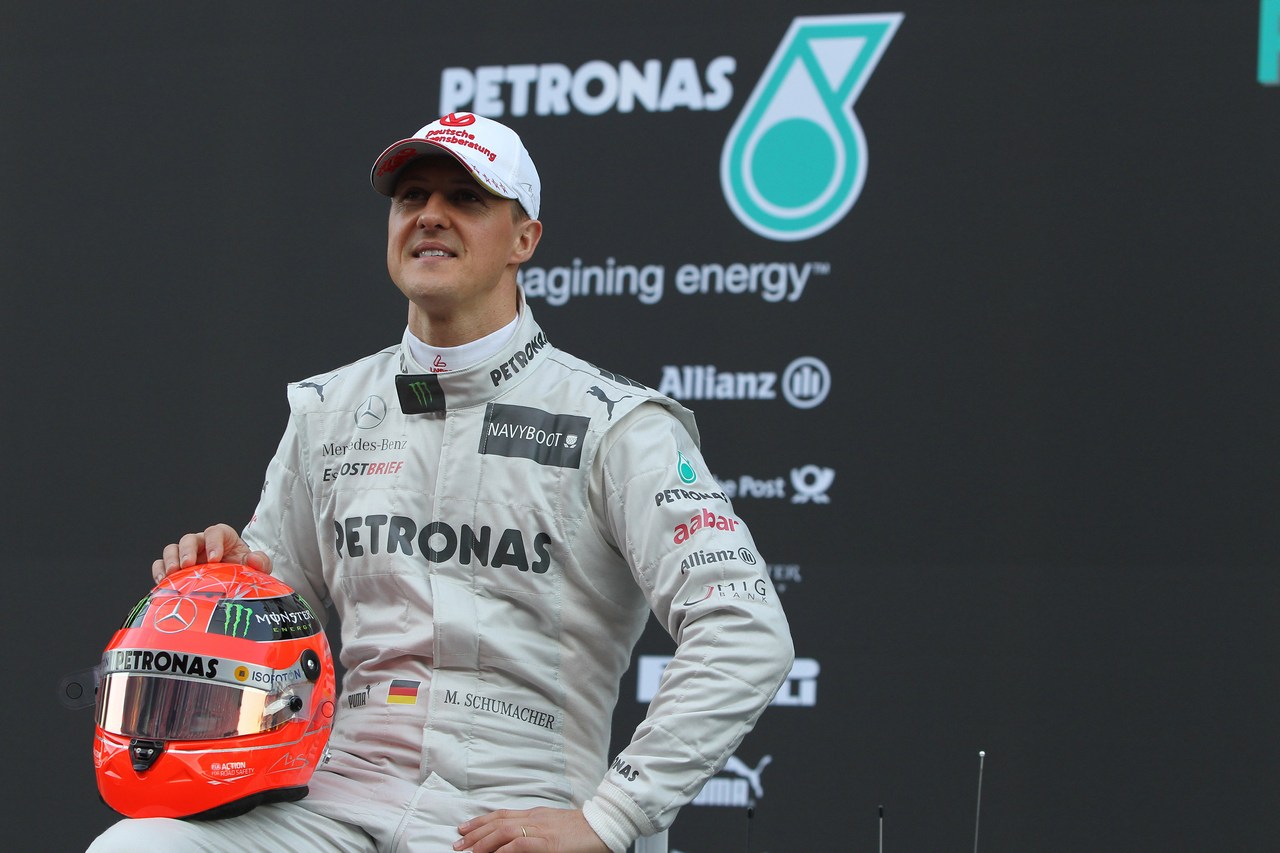
Mercedes and Schumacher's pace are both strong, but the German's results have been plagued by a mixture of bad luck and reliability so far this season. Luck changes and reliability can be improved, which is why Michael needs to stay committed. 


The German legend qualified fastest for last weekend's Monaco Grand Prix before a five-place grid penalty was applied. Schumacher's contract runs out this year, and asked if he wanted him to stay on, Brawn said: "I think it would be everyone's wish.

"We always said Michael himself will know when it's time to retire and after a performance like that why should he?"

Schumacher retired from the race with a fuel-pressure problem after running seventh - he lost ground at the start following a collision with Lotus driver Romain Grosjean.

But his qualifying performance was arguably his most convincing since he made a return to Formula 1 in 2010 after three years in retirement. "It's great for the team and I think it's great for F1 as well," Brawn said. "Let's hope he continues on as long as he can do what he did today."

Schumacher, 43, would not be drawn on his plans for his future. He said: "You imagine that just because of one result I've done at this moment I'm suddenly restarting or opening a different subject. No, that's not the case. "I'm focused on what I'm doing right now. There will come a time when I will make summary of everything and then I will sit down with the team to see what we're going to do."

In the run up to Monaco, there had been some suggestions that the team felt Schumacher needed to up his game. Mercedes chief executive officer Nick Fry had said: "I am sure if we get to the end of this year and it continues as it has done for the last few races, I think he will probably be asking himself that question [about whether to continue]. "There is time to go and we are not making any decisions yet."

But in Monaco Mercedes vice-president of motorsport Norbert Haug said the seven-time champion had never let his poor results affect him. "Michael handled it quite well all the time," Haug said. "I never got the impression he was frustrated or down. He knows what he can do, and he thinks if the car is right he can deliver. "Ross and I and the whole team were always convinced he was a good driver and could do it. That he needed to learn after such a long time was very clear but he shows commitment and his talent was there."

Schumacher struggled through the first 18 months of his comeback, but in the second half of 2011 there were signs that he was recovering some form. He continued to struggle to match team-mate Nico Rosberg in qualifying - the score was 15-4 in the younger man's favour last season - but he produced some strong performances in races.

This year, the qualifying score is three-all, and the two have generally been closely matched on pace, although Schumacher has suffered three retirements, only one of which was driver error. The exception was the Chinese Grand Prix, when Rosberg beat Schumacher to pole position by more than half a second. The pace differential continued as Rosberg romped to his maiden victory and Schumacher retired with a loose wheel.

Driver Market: Vettel to Ferrari in 2014?


Relatively small chances of that happening, but world champion Sebastian Vettel is believed to have an option with Ferrari starting from the 2014 season.


Writing in the British Sunday Times, respected racing journalist Mark Hughes reports that Vettel's option came to light as Lewis Hamilton's management team, Simon Fuller's Nineteen Entertainment, investigated his options beyond the end of this season, when his current McLaren contract expires.

Fernando Alonso is committed to Ferrari until 2016 and Hamilton's team is believed to have been told that although Ferrari would love to have him, there is potentially only a single year deal available should the team decide to replace Felipe Massa for next season and the Vettel option becomes active in 2014.

Given Ferrari's difficult start to 2012, notwithstanding the fact that, post-Monaco, Fernando Alonso leads the championship, it seems unlikely that the double world champion would sign anything committing himself to the Scuderia unless performance clauses were in place on his side. The prospect of Alonso and Vettel in the same Ferrari team, is certainly a mouthwatering one!

Monaco winner Mark Webber has also been linked with Ferrari again in recent weeks. A one-year deal may well suit the Australian just fine, given that he is 36 in August and could see a year at Ferrari as a perfect way to bring his F1 career to a conclusion. His fine drive in Monaco, his second win in the Principality in three seasons, can only strengthen his case.

Another of Red Bull's ace cards is design guru Adrian Newey, who Ferrari has attempted to lure to Italy more than once, as yet without success. There is no guarantee that Maranello will not make further inquiries as to whether Newey's circumstances or his mind have changed.

Why Webber can still beat Vettel at Red Bull


The shape of things to come is the perfect way to describe Mark Webber's victory in Monaco. The Australian bounced back after his troublesome season last year and proved he is still perfectly capable of beating his team mate in 2012. 


Red Bull insists it is in no rush to sort out a fresh contract with Mark Webber for 2013, despite his Monaco Grand Prix victory coming amid speculation that he is a key target for Ferrari. It would be a foolish mistake on the team's side to let the Australian go. 

Webber gave a glimpse of his returning 2010 form this weekend as he calmly controlled the race in Monaco, keeping the car in front from pole to win, while Vettel made good use of his strategy to climb up the order. However, Vettel had been significantly slower than his team mate all weekend long, blaming either the car's balance or tyres. 

It's no secret that Red Bull are not enjoying their previous dominant form and it might not be just down to the car's performance. Vettel seems to be having some difficulties in understanding this year's tyres, while Webber appears to be in a much more comfortable position and is a little more consistent than Vettel, having finished 4th in all of the first four races. It's a fairly reasonable restart considering lat year's performance.

But this was just an appetizer. Although his starts haven't been perfect so far this season, Webber showed no signs of rustiness this Sunday. Once he got the start right, it was all about handling the pressure of the five drivers behind him and taking the car home. Which he both managed perfectly. 

His victory in Monaco should be a major boost of confidence. He knows he has a better understanding of the Pirellis than Vettel. He knows Vettel is struggling with the balance of his car in some places and he now knows that in his hands, the RB8 is indeed capable of winning races. Consistency is far more relevant this year and regular top five finishes are more valuable than two wins and three out-of-the-points finishes. In a grid so tight, every little mistake can cost you dearly, and experience plays an important part in this game. Having been in this game for a while, Webber has the upper hand over Vettel in terms of experience and is less likely to make mistakes. 

Mark Webber is now in a perfect position to prove he can still beat Sebastian Vettel. He has the car, he has the upper hand, he's now got the confidence, he has the same amount of championship points, and he's certainly got the minerals to lay down the gauntlet.